Meal planning
Plan Three Dinners Around the Same Groceries
Use chickpeas, rice, cabbage, carrots, and tomatoes across three different dinners. Includes a shopping checklist, use-up map, and storage decisions.
The useful answer
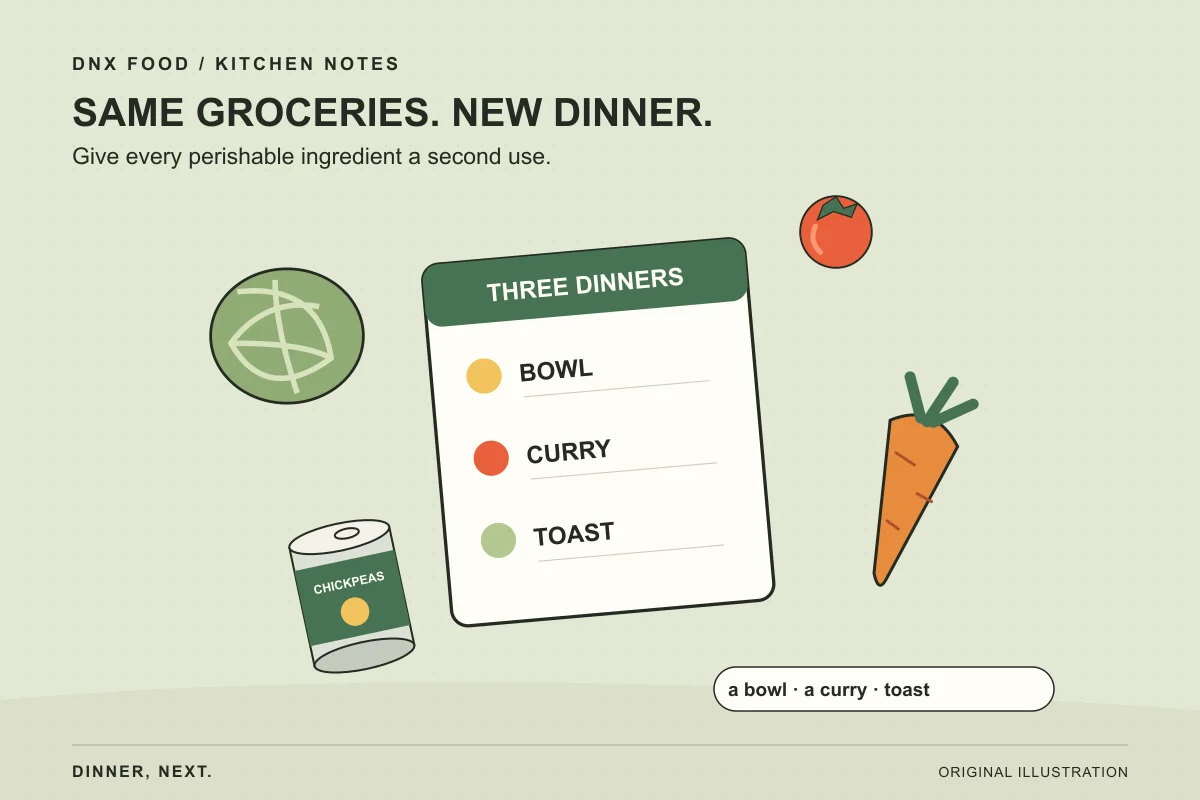
Choose a few ingredients that work in several formats, give each perishable item a second use, and leave sauces separate. Plan rice storage explicitly rather than assuming one cooked batch should last through every dinner.
Meal planning often fails at the half-used ingredients. Monday needs a few cabbage leaves, Tuesday needs half a can of chickpeas, and the rest has no assigned destination. Buying less helps, but a second use is what makes the shopping list work.
Start with three dinners rather than seven. Give each one a different format: a bowl, a saucy skillet, and something on toast. The ingredients can overlap while the meals still feel different. This plan is an example for an ordinary household, not a fixed budget or a personalized meal prescription.
Choose ingredients with more than one useful job
The USDA’s meal-planning guidance recommends checking what you already have, mapping meals, and making a grocery list. The extra step here is assigning each perishable ingredient a role in at least two dinners.
| Ingredient | First use | Second use | Optional third use |
|---|---|---|---|
| Cabbage | Crisp bowl topping | Cooked in a skillet | Shredded alongside toast |
| Carrots | Thin raw shreds | Simmered in curry | Chopped into soup |
| Chickpeas | Warm bowl topping | Main ingredient in curry | Rough mash for toast |
| Tomatoes | Fresh finish or quick sauce | Curry base | Tomato skillet |
| Lemon | Dressing | Curry finish | Smashed chickpeas |
| Rice | Dinner bowl | Freshly cooked side or safely frozen portion | Another meal only if stored appropriately |
An ingredient does not need three uses to earn a place in the plan. It needs enough realistic uses to match the quantity you are buying.
A starter shopping checklist
For roughly two people over three dinners, consider two or three cans of chickpeas, a small cabbage or half a large one, three or four carrots, a can of tomatoes, rice, and a lemon. Add bread or potatoes for the final meal, and plain yogurt or tahini if you want a creamy dressing.
The cupboard assumptions are oil, salt, pepper, garlic or onion, and a spice blend you already enjoy. Coconut milk or another suitable curry base belongs on the list only if it has a clear job. Check your appetite and the drained weight of the cans before treating these amounts as enough for your household.
Cross off what is already at home. Then adjust the meals to use it. If you have pasta but no rice, changing one dinner may be easier than buying another staple solely to follow the example exactly.
Dinner one: a warm chickpea bowl with crisp vegetables
Cook rice for the amount you need, or use a safely stored portion. Warm chickpeas in a skillet with oil and one spice direction, such as cumin and pepper. Shred some cabbage and carrot. Mix a small lemon dressing or loosen yogurt or tahini with water.
Build the bowl with warm rice and chickpeas, then add the raw vegetables and sauce. Keep unused shredded vegetables undressed so they remain useful tomorrow. Reserve additional chickpeas before seasoning if you want a different flavor later.
The rice-bowl guide explains how to balance the components. This dinner gives cabbage a raw, crunchy role; the next gives it a softer one.
Dinner two: tomato chickpea curry with carrots
Soften onion or garlic, add curry seasoning, then tomatoes and a suitable liquid base. Add carrot pieces early enough to become tender. Add chickpeas and some chopped cabbage, then simmer until the vegetables are cooked.
Keep the sauce a little thicker at first and add liquid only as needed. Finish with a little lemon after tasting. Serve with freshly cooked rice, flatbread, or a properly stored frozen rice portion. If there is no coconut milk, the substitution guide gives several different directions.
This dinner uses the same chickpeas and carrots as the bowl, but its method, temperature, texture, and seasoning differ. That is what keeps shared groceries from becoming the same meal on repeat.
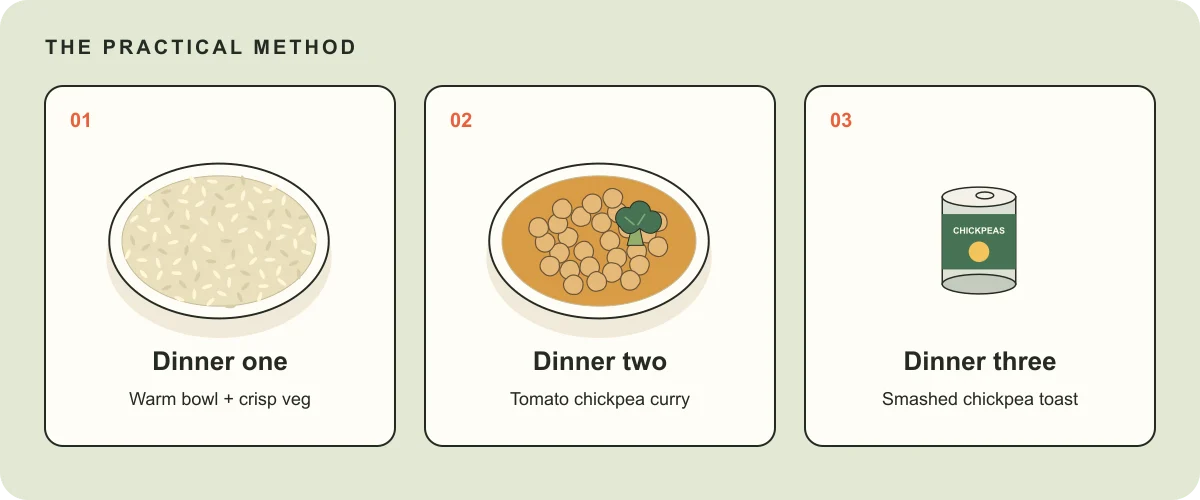 *Keep ingredients flexible until each dinner gives them a different job.*
Dinner three: smashed chickpea toast and a crunchy side
Mash chickpeas with a little oil or yogurt, lemon juice, salt, and pepper. Leave some texture. Spread onto toast or spoon over baked potatoes. Serve the remaining cabbage and carrot as a small slaw, dressing only the portion you plan to eat.
If you have no chickpeas left, change the final dinner rather than opening another can unnecessarily. Eggs, white beans, or another suitable topping can fill the same role. A plan that cannot bend around what remains is just another recipe list.
For more formats, see six chickpea dinner directions. Toast is especially useful for a smaller quantity that would look sparse as the main ingredient in a large skillet.
Make storage part of the plan
Use labels with the preparation date. Store wet dressings separately from crisp vegetables. Refrigerate opened ingredients according to their packaging and do not mix a fresh batch into an older container without tracking the older food.
For general leftovers, USDA guidance advises prompt refrigeration in shallow containers, keeping the refrigerator at 40°F or below, and using refrigerated leftovers within three to four days. Perishable food should not sit out beyond two hours, or one hour above 90°F.
Rice needs a specific decision. This plan follows the more conservative UK Food Standards Agency rice guidance: cool promptly, ideally within an hour, keep refrigerated rice no more than a day before reheating, and reheat only once. Cook fresh rice for later dinners or cool and freeze suitable portions promptly. Do not leave one container in the refrigerator and casually use it throughout the week.
When reheating leftovers, the USDA recommends 165°F throughout. Check several spots, especially after microwave reheating.
Adjust the plan to the week you actually have
If tomorrow is likely to run late, choose the toast meal then and make curry on a quieter evening. If raw cabbage is not appealing, cook most of it and get crunch from cucumber or seeds instead. If the bread is approaching its best quality, move toast earlier.
Review the refrigerator before shopping again. A successful plan reduces the number of unassigned ingredients. It does not require an empty fridge or a perfectly photographed row of matching containers.
Shared-ingredient planning questions
Does repeating ingredients mean eating the same dinner?
No. Change at least two elements: the cooking method, texture, sauce, or base. A chickpea bowl and a chickpea mash on toast can feel quite different.
Should I cook everything on one day?
Only if the storage plan and your schedule support it. Washing or portioning ingredients in advance can be enough. Cooking rice fresh may be simpler than managing multiple cooled portions.
How do I know whether the plan saves money?
Use your actual receipts and note what gets discarded. Prices vary by location and season, so a fixed dollar promise would be misleading. Start by reducing duplicate purchases and ingredients with no second use.
Put it to work
Chickpea Coconut Curry
A forgiving curry framework built around canned chickpeas, aromatics, and coconut milk.
Open the dinner blueprint →Illustrations by DNX FOOD. These guides explain adaptable cooking methods; they do not represent documented kitchen testing. How we make our guides · Suggest a correction