Dinner ideas
How to Build a Rice Bowl That Actually Works
Build a satisfying rice bowl by choosing a base, protein, vegetables, sauce, and a finishing contrast. Includes combinations and fixes for common problems.
The useful answer
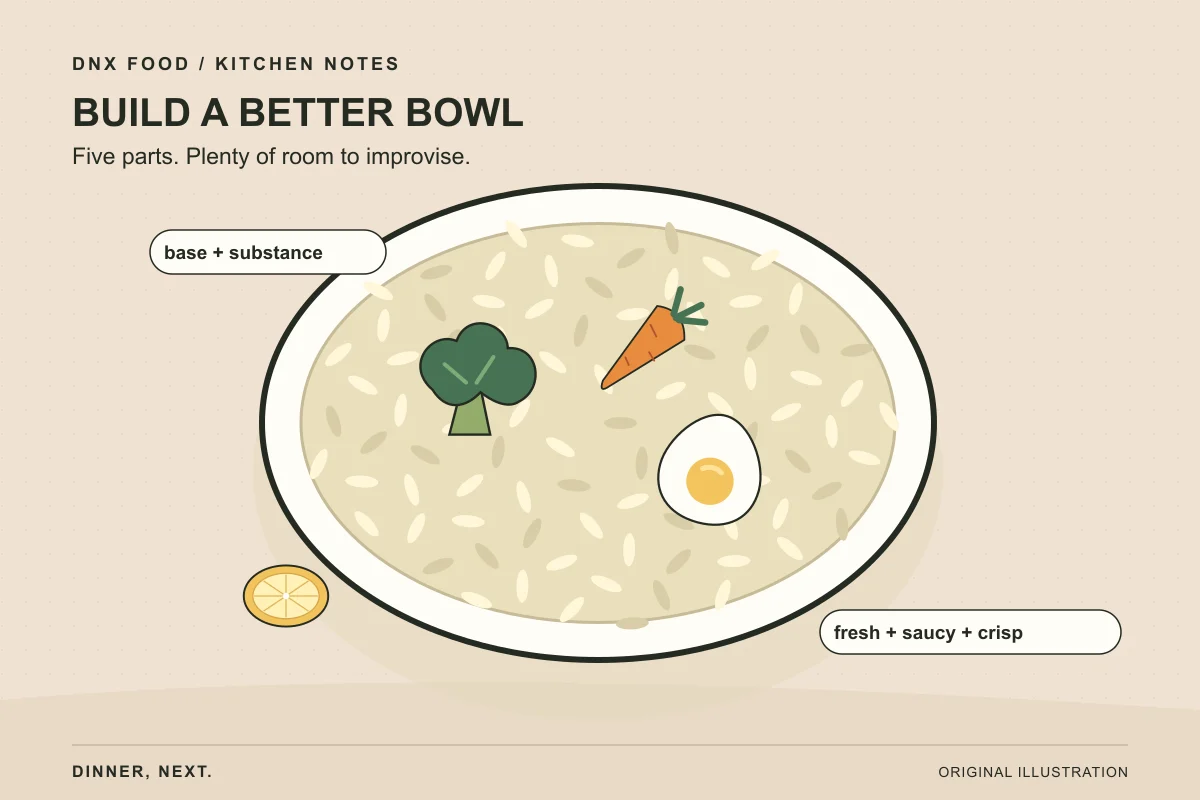
Choose five parts: rice, something substantial, vegetables, sauce, and one contrasting finish. Build around what needs using, and taste the sauce with rice before adding it to the whole bowl.
A rice bowl becomes disappointing in predictable ways. There is a lot of rice and very little topping. Every ingredient is soft. The sauce tastes good on a spoon but disappears once it hits the grain. Or several strong toppings compete for attention.
You can avoid most of those problems before turning on the stove. Start with the ingredient that needs using: half a cucumber, an open can of beans, a block of tofu, or broccoli that has seen better days. Decide what role it can play, then build the other parts around it.
Use a five-part bowl framework
| Part | Its job | Examples | A common mistake |
|---|---|---|---|
| Base | Carries the toppings | Rice, mixed grains, noodles | Letting it crowd out everything else |
| Substantial topping | Makes the bowl feel like a meal | Tofu, beans, eggs, cooked fish | Relying on a tiny garnish for substance |
| Vegetables | Add flavor, freshness, and variety | Broccoli, carrots, cabbage, cucumber | Choosing only soft cooked vegetables |
| Sauce | Connects the components | Sesame dressing, yogurt, soy-lime sauce | Pouring in too much before tasting |
| Finish | Supplies a final contrast | Scallions, seeds, citrus, crisp crumbs | Adding several unrelated flavors |
This is a cooking framework, not a personalized nutrition plan. Adjust the portions to your appetite and needs. For general food-group guidance, the USDA’s MyPlate resources describe ways to include grains alongside other food groups.
Start with a base that leaves room for toppings
For an ordinary dinner bowl, begin with a moderate scoop of cooked rice rather than filling the bowl to its rim. You can add more later. It is harder to fix a bowl in which every topping has become a sparse decoration on a mountain of grain.
Fresh rice works well under vegetables with sauce. Cold stored rice can be reheated safely or turned into a crisp base, but it is not interchangeable with fresh rice in every method. If the rice is already seasoned, keep the sauce milder until you have tasted them together.
Rice does not have to be the only base. Mixing a small amount with shredded cabbage, a cooked grain, or beans can use up leftovers. Avoid combining several poorly stored leftovers merely because they fit the color scheme.
Give the vegetables two different textures
One cooked vegetable and one fresh or crunchy element is an easy starting point. Try roasted broccoli with cucumber, softened mushrooms with shredded cabbage, or warm peas with crisp scallions. The ingredients do not have to be expensive or numerous.
Cut pieces to fit on a fork or spoon with some rice. A huge broccoli floret and a tiny spoonful of rice make the bowl awkward to eat. Long raw carrot strips may look tidy but can pull everything else off a fork; short shreds are more practical.
Keep juicy raw vegetables separate until serving. Tomatoes and salted cucumber can release water that collects under the rice. That can be pleasant in some bowls, but it should be a choice rather than a surprise.
Match the sauce to the bowl’s texture
A dry bowl with crisp tofu often needs a sauce with some body. A bowl of soft beans and roasted vegetables may need a sharper, thinner dressing. Make a small amount first and taste it with a spoonful of rice, not just from the mixing bowl.
Creamy direction: thin plain yogurt, tahini, or a smooth nut or seed butter with water a little at a time. Add citrus and salt gradually. Each base tastes different, so do not treat them as identical substitutes.
Savory direction: combine a small amount of soy sauce with water, citrus or vinegar, and a little oil. If the soy sauce is already very salty, dilution may matter more than another ingredient.
Tomato direction: use a warm tomato-and-bean or tomato-and-egg topping as the sauce itself. Adding a second dressing on top may make the bowl muddled.
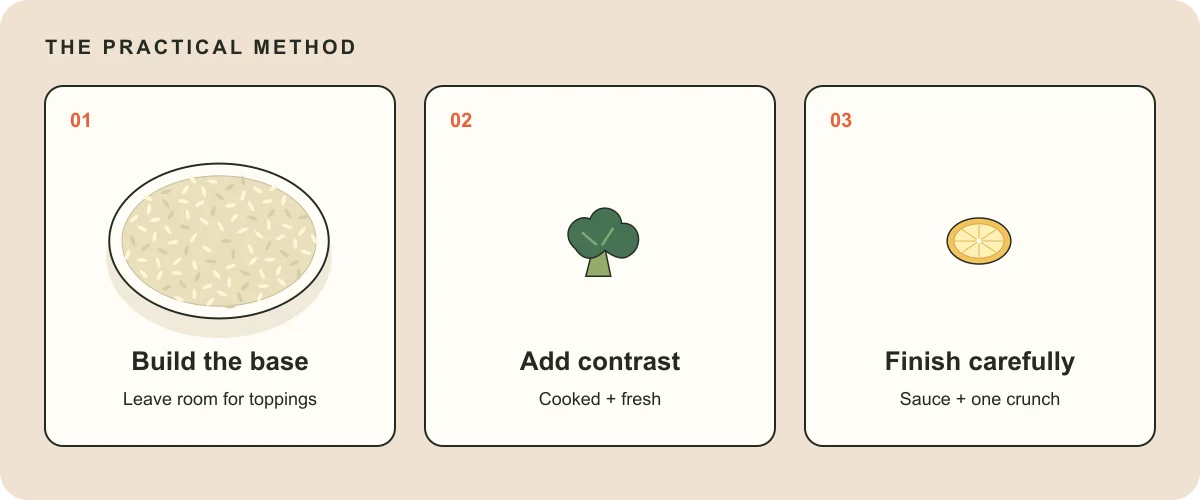 *Choose a role for each ingredient before adding more of them.*
Three combinations from ordinary groceries
Tofu, broccoli, and cucumber: warm rice, browned tofu, cooked broccoli, cucumber, and sesame-lemon sauce. The cucumber supplies freshness; the tofu supplies a crisp edge. See the tofu bowl blueprint for an adaptable method.
Chickpea, carrot, and cabbage: rice, warm spiced chickpeas, cooked carrots, raw shredded cabbage, and a spoonful of lemony yogurt or tahini. If the chickpeas are soft, toasted seeds give the bowl another texture. Our chickpea guide includes more ways to handle them.
Egg, tomato, and scallion: rice topped with tomato and eggs, finished with scallions. Keep this bowl simple. The tomatoes already provide moisture and acidity, so a rich dressing is usually unnecessary. Read what to make with eggs and rice for alternatives.
Fix an unfinished bowl by naming the problem
| What feels wrong | Try this first |
|---|---|
| Dry and hard to swallow | Add a small amount of sauce or a juicy cooked topping |
| Heavy and one-note | Add citrus, vinegar, herbs, or a fresh vegetable |
| Salty throughout | Add unsalted rice and vegetables; stop adding bottled sauce |
| Soft from top to bottom | Add a crisp vegetable, toasted seeds, or crumbs |
| Toppings keep sliding away | Cut them smaller and use a shallower bowl |
Add the fix in a small amount, then take another bite. A bowl that needs one teaspoon of acidity does not necessarily need a whole new sauce.
Prepare components, not a week’s worth of identical bowls
Store wet sauces separately from crisp toppings. Keep raw vegetables away from hot rice until you are ready to eat. You can use the same cooked component in another format the next day: chickpeas in toast, broccoli with pasta, or tofu in noodles.
For rice-specific storage guidance, consult the Food Standards Agency’s advice. Reheat only what you plan to eat and avoid repeatedly cycling a large container between warm and cold.
Rice-bowl questions
Does every bowl need a separate sauce?
No. A saucy curry, tomato skillet, or stew can do that job. Count the moisture already present before reaching for another bottle.
What if I only have one vegetable?
Use it in two forms if appropriate: cooked cabbage with a little raw shredded cabbage, for example. Or get the contrast from seeds, herbs, or a crisp protein instead.
Can I prepare the whole bowl in advance?
Some combinations keep their texture better than others. For most bowls, packing the sauce and crunchy finish separately gives you more control when serving.
Put it to work
Crispy Tofu Rice Bowl
A mix-and-match bowl with crisp tofu, any cooked grain, and a punchy sauce.
Open the dinner blueprint →Illustrations by DNX FOOD. These guides explain adaptable cooking methods; they do not represent documented kitchen testing. How we make our guides · Suggest a correction