Dinner ideas
A Can of Chickpeas, Six Ways to Make Dinner
Turn canned chickpeas into a skillet, curry, smashed toast, soup, a rice bowl, or a crunchy topping. Choose a method by texture and pantry ingredients.
The useful answer
For a quick dinner, pair chickpeas with a base, a vegetable, and a sauce. Dry the chickpeas thoroughly only when crispness matters; use them straight from draining in soups and saucy skillets.
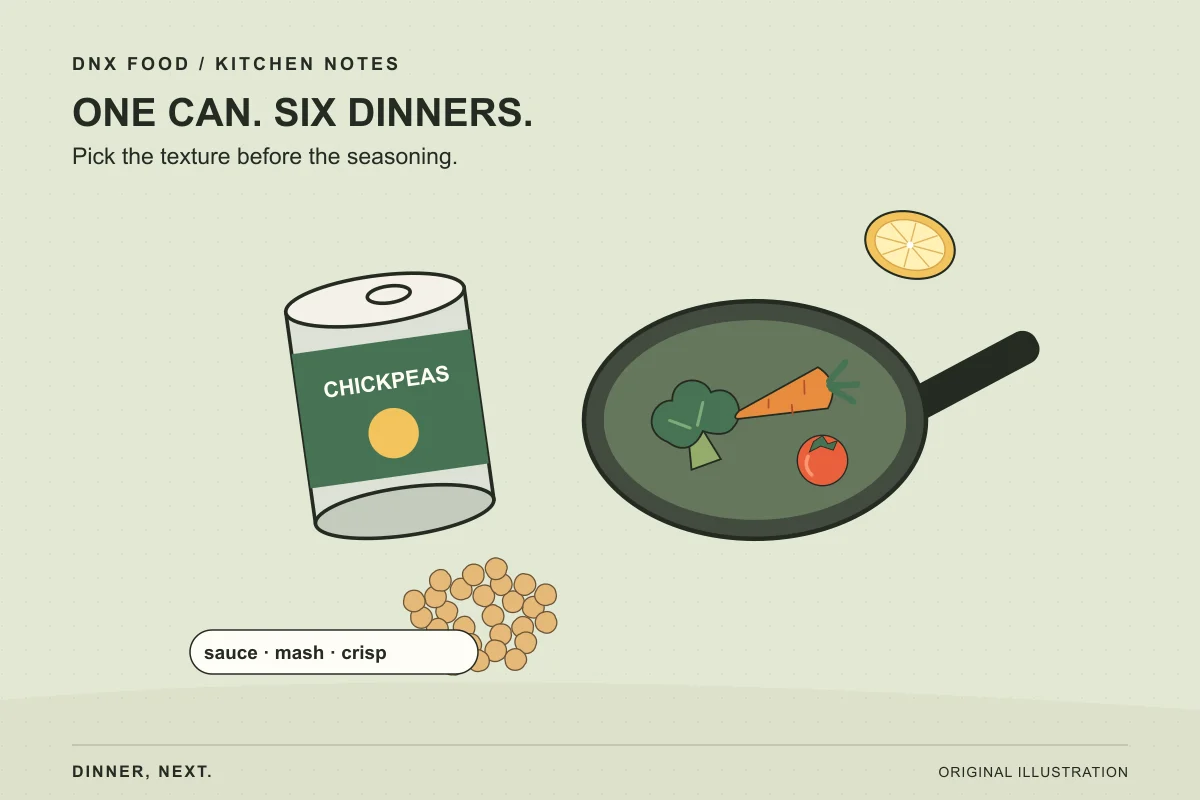
A can of chickpeas is useful because most of the work has already been done. You can heat them in sauce, mash them into something spreadable, or dry them for a crisp edge. Those three textures lead to quite different dinners, even when the seasonings overlap.
Start by checking the label. Plain canned chickpeas are normally cooked, but products sold with sauces or special preparations may have their own instructions. Drain the can into a sieve. Rinse if you want to remove the packing liquid and begin with a cleaner flavor. Keep the liquid only when you have a use for it; it does not need to go into every dish.
Pick the texture before picking the spices
| Dinner direction | Chickpea texture | Good partners | Serve with |
|---|---|---|---|
| Tomato skillet | Soft and coated | Tomatoes, garlic, spinach | Toast or rice |
| Quick curry | Soft in sauce | Coconut milk, curry paste, greens | Rice or flatbread |
| Smashed chickpea toast | Roughly mashed | Lemon, oil, celery or cucumber | Toast, pita, or baked potatoes |
| Brothy soup | Whole with some mashed | Stock, carrots, leafy greens | Bread |
| Warm grain bowl | Whole, lightly browned | Roasted vegetables, yogurt or tahini | Rice or another cooked grain |
| Crisp chickpeas | Dry with browned edges | Paprika, cumin, pepper | A bowl or salad with a substantial base |
A crisp topping by itself may not feel like dinner. Give it something soft underneath and something saucy alongside. Equally, a bowl of soft chickpeas benefits from a few raw vegetables or toasted crumbs rather than more soft ingredients.
The tomato skillet route
For a small skillet, start with one drained can, a little oil, an aromatic such as onion or garlic, and enough tomatoes to surround the chickpeas without turning the pan into soup. Canned tomatoes are convenient; chopped fresh tomatoes work when they are flavorful.
Soften the aromatic first. Add the tomatoes and let excess liquid cook away before the chickpeas go in. Once the chickpeas are hot, mash a few against the side of the pan to give the sauce some body. Stir in spinach near the end, then taste before adding more salt.
Choose one finish: lemon and parsley, chili flakes and grated cheese, or a spoonful of yogurt at the table. Using all three can blur the flavor. Serve with toast if the sauce is thick, or over rice if you have kept it looser.
Curry when the pantry is doing most of the work
Chickpeas, coconut milk, curry seasoning, and a vegetable are enough for a flexible curry. Check whether your curry paste contains shrimp or fish ingredients if you are preparing a vegetarian meal. Start with a small amount because brands vary considerably in salt and heat.
Cook aromatics, add the seasoning, then pour in the coconut milk and chickpeas. Simmer gently and add vegetables according to how long they need. Finish with lime or lemon after checking salt. If you have no coconut milk, choose a substitute for body as well as flavor; our curry substitution guide explains the tradeoffs.
The chickpea curry blueprint keeps the ingredient formula in one place.
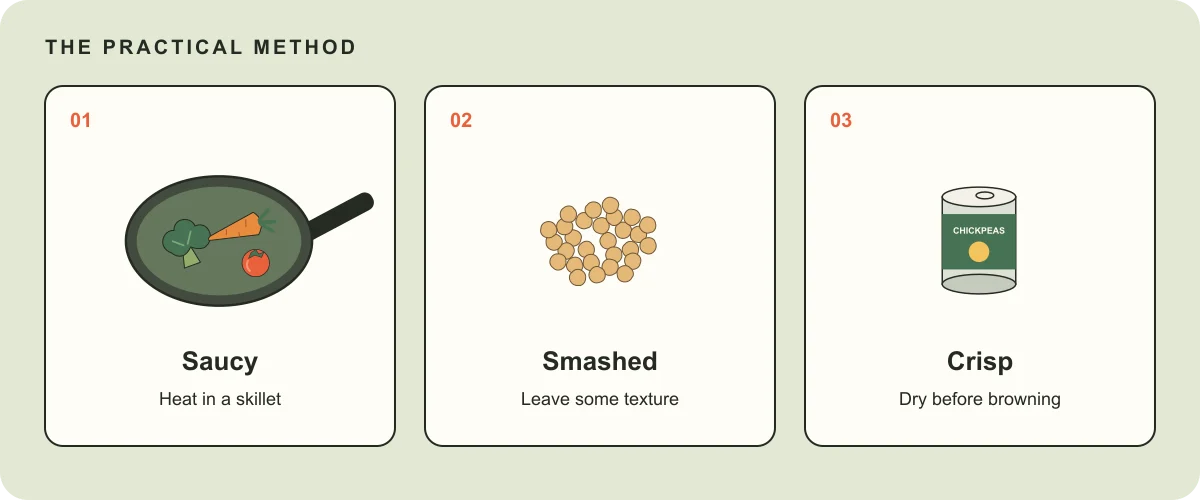 *Sauce, mash, or crisp: each route asks for different preparation.*
Smashed chickpeas for a dinner with less washing up
Mash drained chickpeas with a fork, a spoonful of olive oil or plain yogurt, and a small amount of lemon juice. Stop while some pieces remain. A perfectly smooth puree is a different job and usually needs more liquid and equipment.
Add finely chopped celery, cucumber, scallions, or herbs for contrast. Salt gradually. Spread on toast, stuff into warm pita, or spoon over a baked potato. If the mixture falls off the bread, mash a little more of it rather than drowning it in dressing.
For a packed meal, carry crisp vegetables separately when possible. Watery tomatoes can be excellent at the table but may make a sandwich soggy if left inside for hours.
Soup and bowls are forgiving about quantities
In soup, chickpeas supply substance while the broth carries most of the flavor. Cook any firm vegetables first, add stock and chickpeas, then add greens. Mash a ladleful and return it if the broth feels thin. This is particularly useful when there is too little left in a can to build a whole skillet around it.
For a bowl, warm the chickpeas with one spice or a little garlic. Put them over rice with vegetables and a sauce. A rich tahini sauce needs something sharp alongside it; a thin lemon dressing usually needs a little oil or another source of richness. Our rice-bowl guide walks through those choices.
What stops chickpeas becoming crisp?
Surface water is the first obstacle. After rinsing, spread the chickpeas on a towel and pat dry. Use a roomy pan or tray and avoid adding a wet sauce before browning. Stirring constantly in a crowded skillet produces hot chickpeas, but very little crust.
Keep your expectations reasonable: some canned chickpeas remain creamy inside even with a browned exterior. Serve them soon after cooking because steam from a hot bowl softens the surface. Add a sticky dressing at the table instead of before a long rest.
A useful two-meal plan
If cooking for one, reserve part of the drained can before adding sauce. Use the first portion in a tomato skillet and the second in smashed toast. Store opened chickpeas covered in the refrigerator and follow the package’s storage instructions. This approach changes the texture, rather than asking you to eat the same bowl twice.
Draining and rinsing also affects sodium. A published study hosted by Bush’s found that draining, and draining followed by rinsing, reduced sodium in the canned bean varieties studied. The exact change depends on the product, so use the label rather than assuming every can is equivalent.
Common chickpea questions
Do I need to remove every skin?
Not for a skillet, soup, or rough mash. Remove loose skins if they bother you, but there is little reason to turn a quick dinner into a peeling project.
Can white beans replace chickpeas?
Often, especially in soup or a tomato skillet. They are usually softer, so fold them gently and expect less bite. They may mash more readily into a sauce.
What makes a chickpea dinner taste complete?
Check four things: enough salt, some acidity, a source of richness, and a texture contrast. If all four are present, another spice blend is rarely the missing piece.
Put it to work
Chickpea Coconut Curry
A forgiving curry framework built around canned chickpeas, aromatics, and coconut milk.
Open the dinner blueprint →Illustrations by DNX FOOD. These guides explain adaptable cooking methods; they do not represent documented kitchen testing. How we make our guides · Suggest a correction