Smart swaps
Out of Rice Vinegar? Choose a Substitute by the Dish
Choose a rice vinegar substitute for dressings, sauces, and dinner bowls. Learn when to use white wine vinegar, cider vinegar, citrus, or seasoned rice vinegar.
The useful answer
For everyday savory cooking, white wine vinegar is a useful first choice. Start with slightly less than the rice vinegar amount, then taste. Seasoned rice vinegar already contains sugar and salt, and citrus changes the flavor more noticeably.
You are halfway through mixing a sauce and the rice vinegar bottle is empty. The right substitute depends on whether the vinegar is a quiet sour note or a defining flavor. A teaspoon in a skillet is forgiving. A dressing made mostly from vinegar is less so.
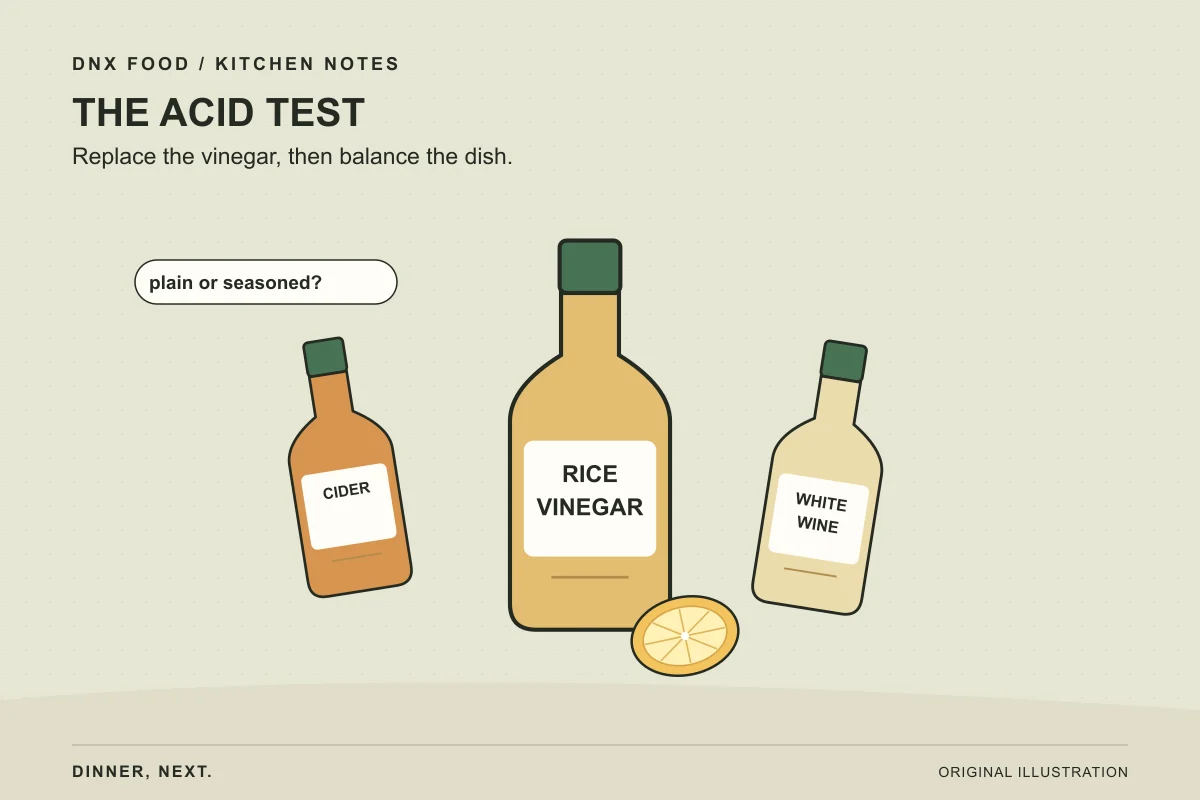
Check the label you were trying to replace. Plain rice vinegar and seasoned rice vinegar are different products. Confusing them can make a sauce unexpectedly sweet or salty even when the acid tastes about right.
First, identify plain or seasoned rice vinegar
Plain rice vinegar contributes acidity and a relatively gentle fermented flavor. Seasoned versions add other ingredients. For example, Kikkoman’s seasoned rice vinegar lists sugar and salt, while its plain rice vinegar specification describes a different formulation.
That distinction gives you a useful rule: substitute the vinegar first, then adjust sugar and salt separately. Do not assume the word “rice” makes two bottles equivalent. Acidity and seasoning also vary by brand.
A substitution table for ordinary dinner cooking
These are cautious starting points for immediate-use sauces and dressings, not laboratory equivalents. Taste a small amount with the food it will season.
| Available ingredient | Starting point for 1 tablespoon rice vinegar | Best fit | What changes |
|---|---|---|---|
| White wine vinegar | Start with 2 teaspoons; add more if needed | Dressings, pan sauces, bowls | Can taste sharper |
| Apple cider vinegar | Start with 2 teaspoons | Cabbage dressings, robust sauces | Adds a noticeable apple aroma |
| Lemon or lime juice | Start with 2 teaspoons | Fresh dressings, finishing cooked dishes | Adds citrus flavor |
| Distilled white vinegar | Begin with 1 teaspoon plus 1 teaspoon water | Small amounts in strongly flavored sauces | More direct, less rounded flavor |
| Seasoned rice vinegar | Start with a little less than 1 tablespoon | Dressings and dipping sauces | Adds sweetness and salt |
The reduced starting amounts leave room to adjust. Your sauce may ultimately need the full tablespoon; another may taste balanced with less. A measurement can start the decision, but it cannot replace tasting.
For dressings, test it on a vegetable
Vinegar tastes more aggressive straight from a spoon than it does spread over cabbage, cucumber, or rice. Mix a small dressing, coat one bite of the intended food, and wait a moment before deciding it needs more acid.
If you use cider vinegar, choose a dressing where its flavor has somewhere to go: cabbage, carrots, mustard, or a little honey can accommodate it. In a very delicate cucumber dressing, lemon or white wine vinegar may be easier to balance.
Add sugar only when the finished bite needs it. A sauce already containing sweet chili sauce, hoisin, or seasoned vinegar may not need more. Likewise, wait to add salt if soy sauce is already part of the dressing.
For stir-fry sauce, use a small amount late in the decision
In a strongly seasoned stir-fry sauce, the vinegar may be only one small component. A cautious amount of white wine or cider vinegar can work without redirecting the whole meal. Mix the sauce before adding it to the pan so you can check the balance.
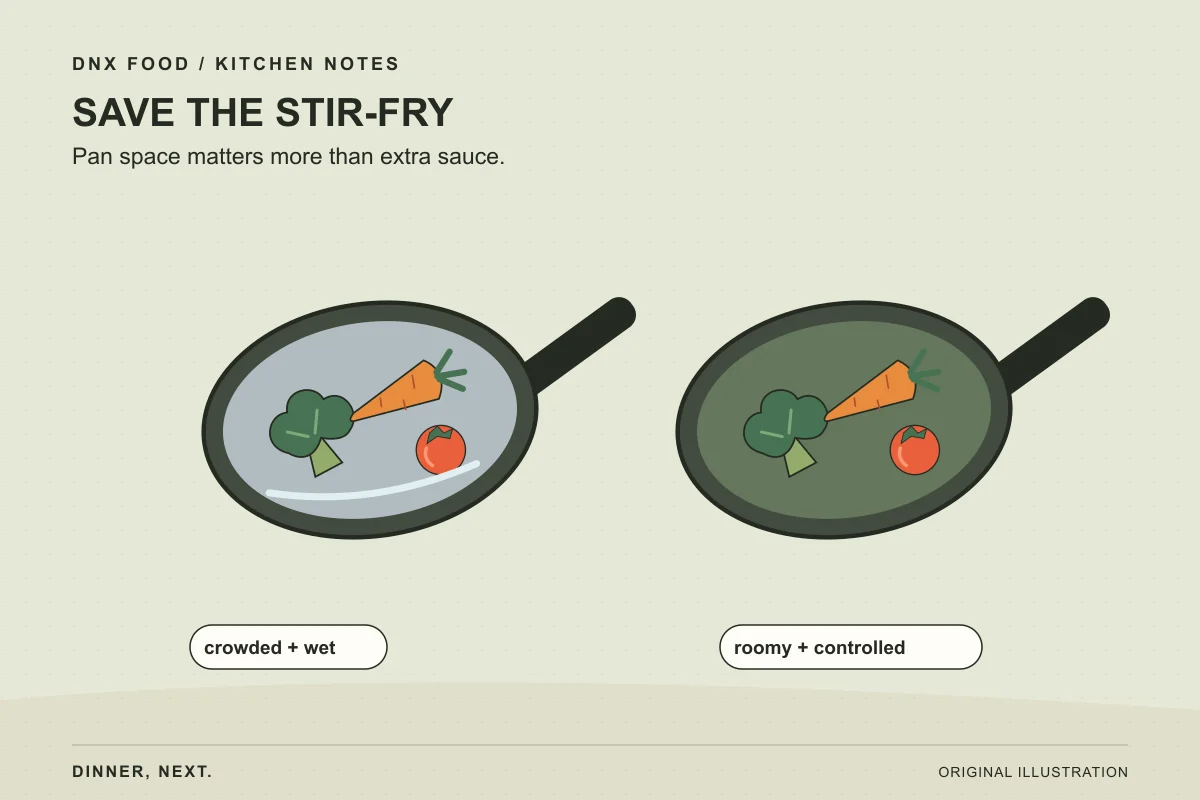
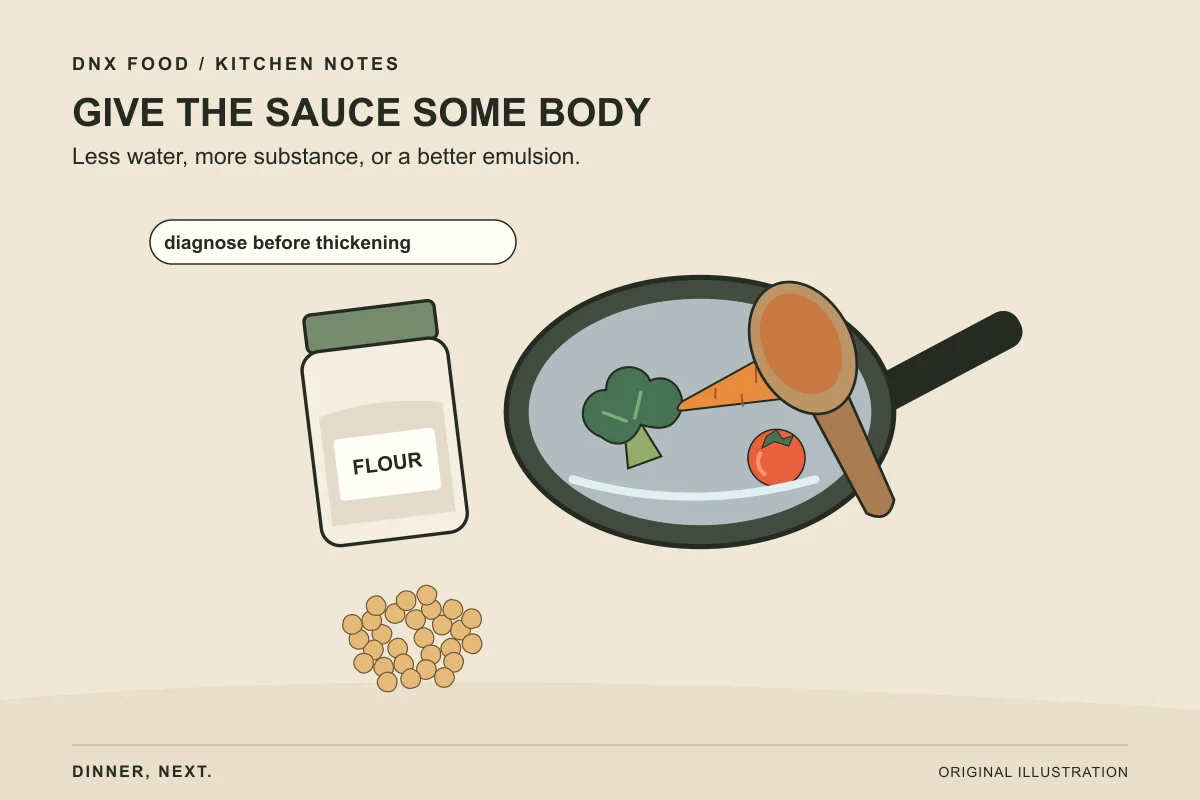
If the finished dish tastes flat, a little acid may help. If it tastes watery, vinegar will not fix its texture. Cook off excess liquid separately or address the thickener. The stir-fry troubleshooting guide explains why adding more sauce often makes that problem worse.
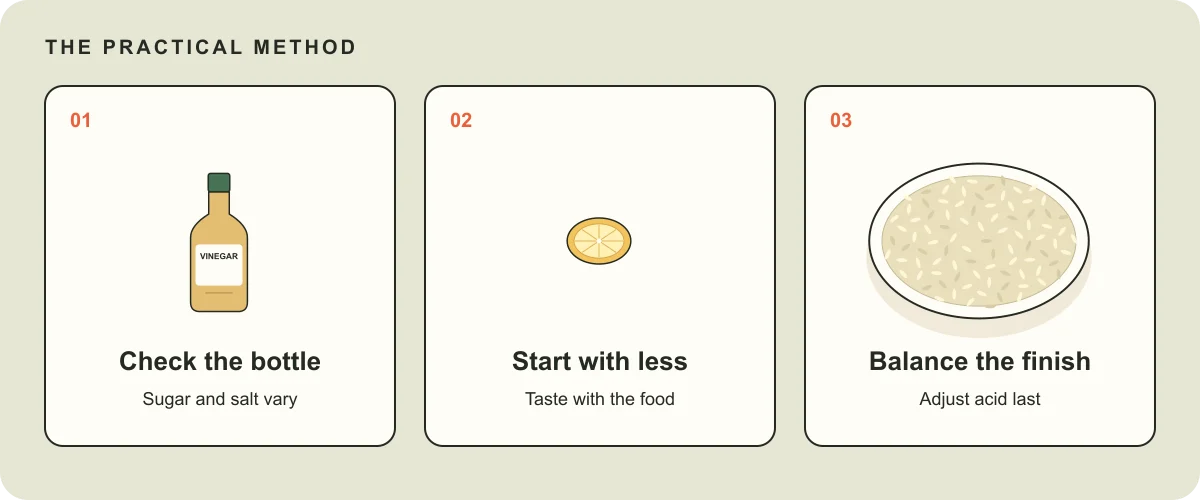 *Choose the closest flavor first, then balance sweetness and salt.*
When the substitute is too sharp
Remove a spoonful of the sauce and test your correction there. Add a little water or an unseasoned component, then try it with food. That is safer than repeatedly correcting the whole batch with sugar, soy sauce, and more vinegar.
Sugar can soften the perception of acidity, but it does not turn a sharply vinegary sauce into a neutral one. More oil may make a dressing feel rounder, yet it also changes how heavily the vegetables are coated. Sometimes the cleanest fix is making a little more dressing without acid and combining the two.
If you used dark balsamic vinegar, expect the color and sweetness to remain. It may be fine for roasted vegetables, but there is no reason to pretend it will produce the same result as pale rice vinegar.
Rice wine, mirin, and vinegar are not interchangeable
The names can be misleading. Rice wine is an alcoholic cooking ingredient. Mirin is generally a sweet rice-based seasoning or wine-style product, depending on the bottle. Rice vinegar supplies acidity. Replacing one with another may remove the very function the recipe needed.
Read the ingredient list rather than guessing from the bottle’s shape. If the dish calls for vinegar and you only have mirin, use another suitable acid or choose a different sauce direction. Adding more sweet wine does not solve missing acidity.
Limits: sushi, pickles, and preserved food
A casual substitution in a dinner dressing is not the same as changing a preservation recipe. Do not use this table to alter shelf-stable pickles or other home-canned foods: acidity is part of their safety design. Use a tested preservation recipe from an appropriate food-preservation authority.
For sushi rice, changing vinegar can alter the finished seasoning. If you want a recognizable, repeatable result, use a preparation developed for the product you have. For a simple dinner bowl, the flavor has more room to move.
Rice-vinegar questions
Is rice wine vinegar the same as rice vinegar?
The terms are often used for the same kind of vinegar, but inspect the label for added seasonings and the actual product description. The wording alone is not enough to compare two brands.
Can I leave the vinegar out?
Sometimes. Make a small taste test with the other sauce ingredients. If the dish feels heavy or one-note, a different acid may improve it; if another ingredient already provides acidity, omission may be fine.
Which substitute is best for a rice bowl?
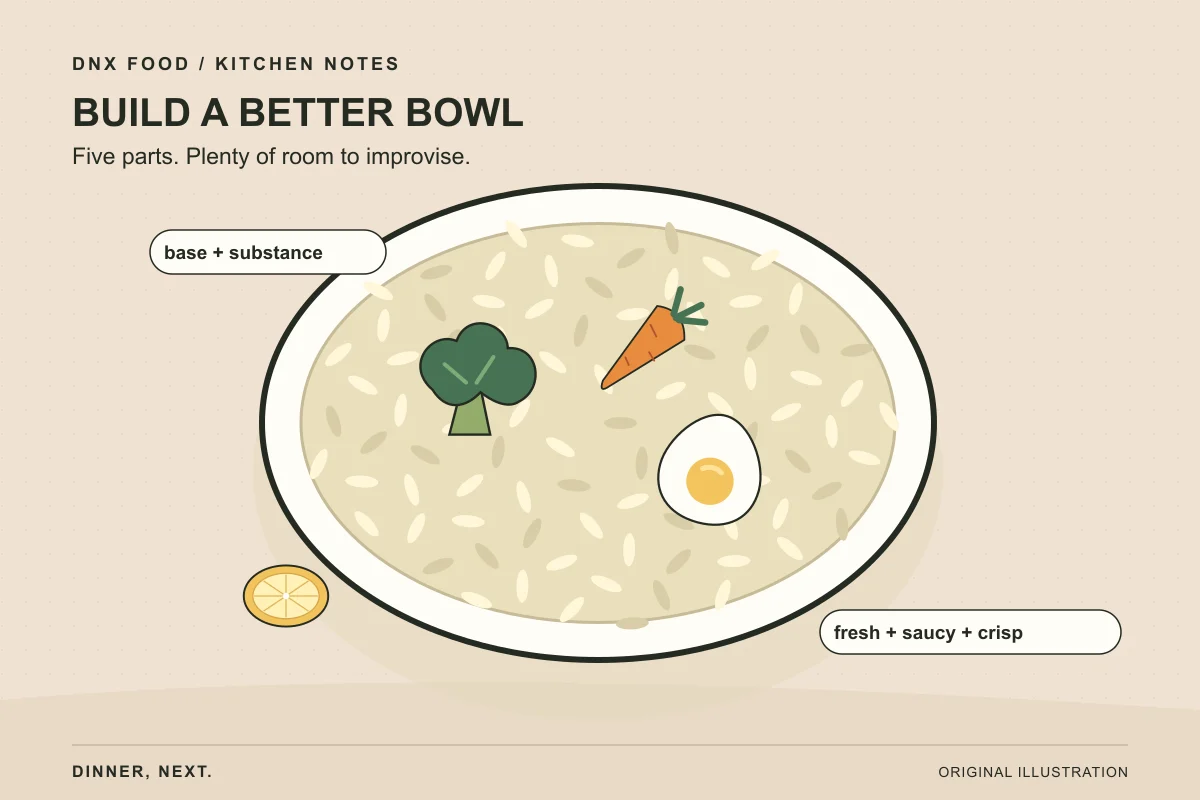
Choose one that suits the toppings. Lemon works naturally with herbs and chickpeas; white wine vinegar is a quieter option in a sesame dressing. Our rice-bowl guide helps match the sauce to the rest of dinner.
Put it to work
Any-Vegetable Stir-Fry
A timing-first method that works with almost any mix of firm and tender vegetables.
Open the dinner blueprint →Illustrations by DNX FOOD. These guides explain adaptable cooking methods; they do not represent documented kitchen testing. How we make our guides · Suggest a correction